
Electrodeionisation (EDI) Systems: Continuous, Chemical-Free Ultrapure Water Production
Eco-friendly electrodeionisation systems that minimise chemical use for continuous, high-quality pure water production.
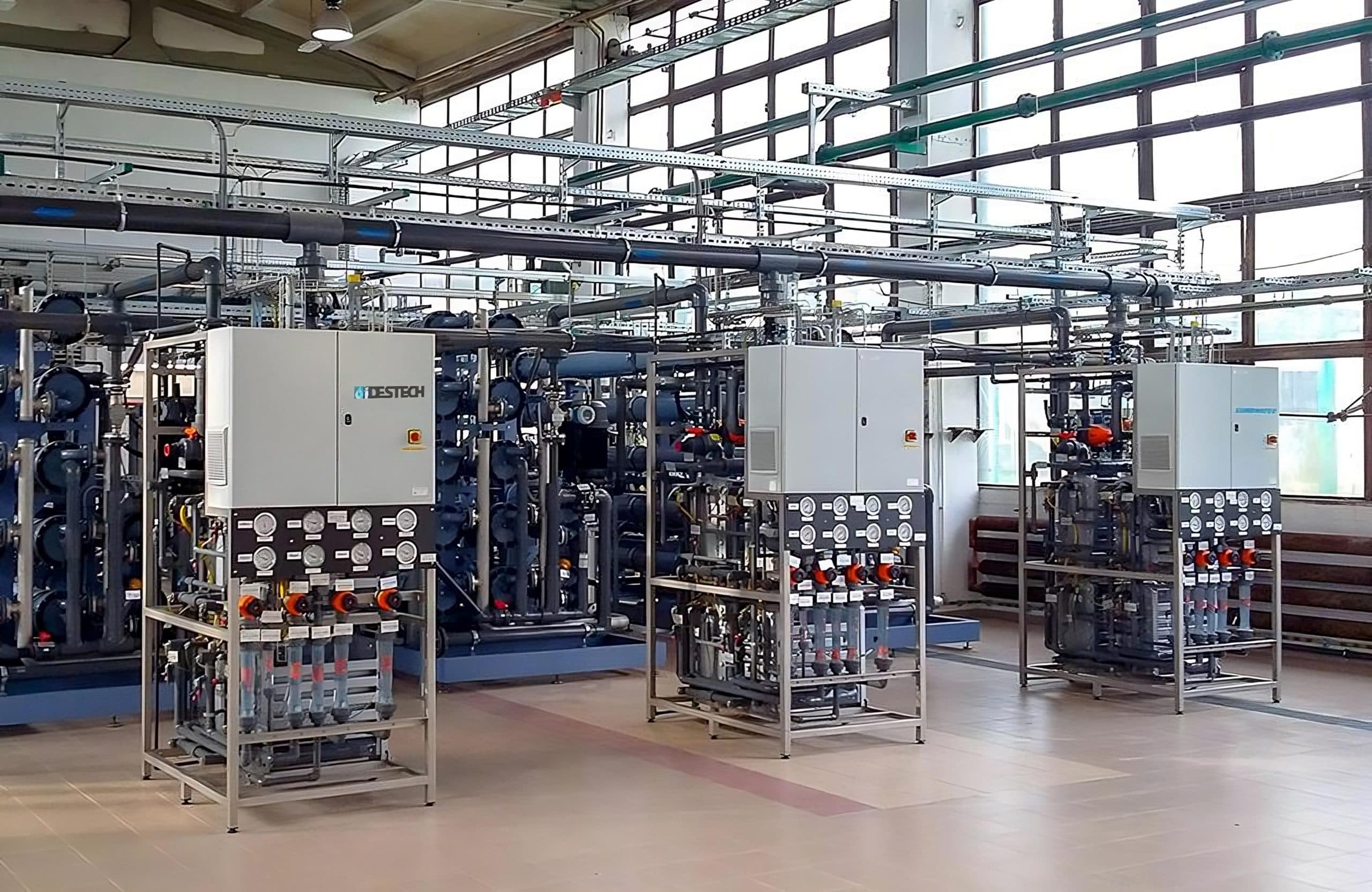
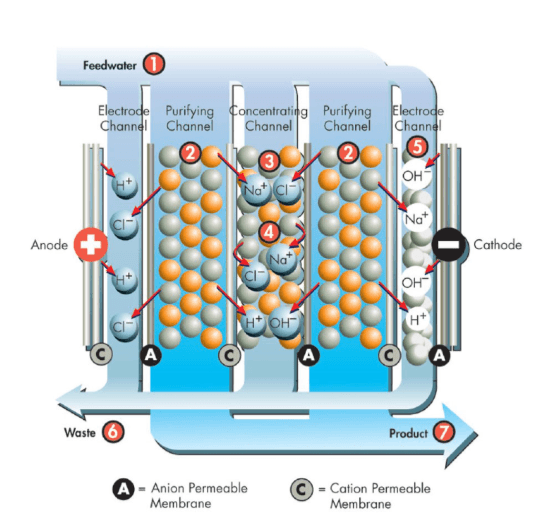
In industrial processes, the need for ultrapure water is critical, especially in the energy, electronics, pharmaceutical and food sectors. aquaDESTECH Electrodeionisation (EDI) systems are continuously operating treatment solutions developed with advanced technology to purify water of ionic and non-ionic contaminants. EDI technology takes the pure water coming from pre-treatment such as reverse osmosis and polishes it further in resin and membrane modules with the help of an electric field, operating continuously and without chemicals, unlike conventional mixed-bed ion exchangers (MBDI).
In EDI systems, a combination of ion exchange resin and ion-selective membranes carries the dissolved ions out of the system by means of an electric field. The resins do not need to be regenerated with salt or acid/caustic chemicals. This eliminates chemical use in operation, minimises waste and lowers operating costs. EDI systems produce high-purity water with conductivity down to <0.1 µS/cm. Integrated with reverse osmosis systems, EDI is an extremely reliable and sustainable source of pure water in the process chain.
In an EDI module, the positive and negative ions in the water move under the electric field and are carried out of the system through selective membranes. As a result, outlet conductivity can fall below 0.1 µS/cm. This quality is essential especially in the semiconductor, pharmaceutical, biotechnology and energy sectors. Because EDI technology runs continuously, production processes are not interrupted, water quality does not fluctuate and no manual intervention is needed.
aquaDESTECH EDI systems are equipped with automation and remote monitoring. All system parameters are tracked in real time on a PLC-based control panel. Critical indicators such as flow, temperature and conductivity are monitored instantly, and in the event of any deviation the automation system steps in to prevent failures. This maximises process safety and sustainability for businesses.
Another important advantage is that EDI requires very little maintenance. Chemical tanks, dosing pumps and acid/caustic storage are no longer needed, and there is no frequent resin replacement or regeneration waste as with conventional mixed-bed ion exchangers. This offers a significant advantage in both operating costs and environmental obligations.
Energy efficiency is another strength of EDI systems. EDI modules consume power only for the electric field and run on very little energy overall. In terms of water consumption, system efficiency is optimised by pre-treatment and the amount of wastewater is minimised. Modular EDI solutions can easily be scaled to different flow requirements and integrated into existing systems. In a large industrial plant, the RO + EDI combination provides a continuous supply of ultrapure water for process needs while bringing chemical purchasing and waste disposal costs close to zero.
As environmental regulations become ever stricter in Türkiye and worldwide, reducing chemical use in process water and improving waste management is becoming a necessity for businesses. aquaDESTECH EDI systems meet these legal requirements and guarantee long-term sustainability. The success of our systems is proven by positive customer feedback and field applications in many sectors.
In conclusion, EDI systems make continuous, high-purity and environmentally friendly pure water production possible. To gain both cost and quality advantages in your industrial water treatment investments, talk to our expert team via our contact page and request solutions tailored to your facility. Take your process water quality to the next level with aquaDESTECH!
Main Components and Functions of an EDI System
Component | Function | Description |
|---|---|---|
EDI Module | Ion removal | Main processing unit consisting of ion exchange resin and membranes |
Power Supply Unit | Provides the electric field | Moves the ions through the module |
PLC Automation System | Process control and monitoring | Automatic operation, data logging and alarm management |
Pre-treatment (RO) | Pre-filtration and ion load reduction | Produces feed water suitable for EDI after reverse osmosis |
Pump and Valve Group | Flow control | Keeps flow and pressure constant and optimises the system |
Online Sensors | Quality control | Monitor critical parameters such as conductivity, temperature and flow |
Design and Performance Parameters for EDI Systems
Parameter | Typical Value / Range | Description |
|---|---|---|
Feed Conductivity | < 20 µS/cm | Maximum conductivity of water before EDI |
Outlet Conductivity | < 0.1 µS/cm | Target value for ultrapure water |
pH Range | 6 – 9 | Recommended pH range for system efficiency |
Operating Pressure | 2 – 6 bar | Typical operating range of an EDI module |
Temperature | 5 – 35°C | Optimum operating temperature |
System Capacity | 0.5 – 50 m³/h | Modular design suitable for different flow rates |
Why aquaDESTECH Electrodeionisation (EDI) Systems?
Chemical-Free Process
EDI systems need no acid or caustic for regeneration, guaranteeing operational safety and environmentally friendly treatment.
Continuous and Automatic Operation
Thanks to the modular design, uninterrupted pure water production is achieved with minimal human intervention.
Low Operating and Maintenance Costs
Chemical purchasing, storage and disposal costs are eliminated.
High-Purity Water
Meets your ultrapure water needs by reaching conductivity values below 0.1 µS/cm.
Automation and Remote Monitoring
PLC-based control enables process safety, data logging and online monitoring.
Environmentally Friendly Solution
Reduces waste generation and contributes to environmental sustainability.
Frequently Asked Questions
An EDI system is an advanced treatment technology in which pure water is stripped of ions between ion exchange resin and ion-selective membranes by an electric field. The ions in the water are driven through the selective membranes by the electric field and removed continuously. It provides continuous, uninterrupted production of pure water without chemical regeneration.
EDI systems produce ultrapure water, with outlet conductivity usually reaching <0.1 µS/cm. This is ideal for electronics, pharmaceutical and laboratory applications.
Because ions are continuously removed in the resin–membrane combination with the help of the electric field, no salt, acid or caustic is needed for regeneration. This eliminates both chemical costs and environmental impact.
Reverse osmosis mechanically removes large ions and particles from the water, while the EDI system electrically separates the small amount of ions remaining after RO. The result is ultrapure water.
Because the resins in EDI modules are continuously regenerated electrically, frequent resin replacement as in conventional ion exchangers is not required. Renewal is only needed at the end of the module's life.
The typical service life of EDI modules is 5–10 years, depending on feed water quality and maintenance.
Maintenance is quite easy: calibration of online sensors, checks of module connections and routine tests of the automation system are sufficient. Since there are no chemical tanks to manage, maintenance work is minimal.
EDI systems are designed to run continuously. In the event of a fault or maintenance, they can be switched to batch operation.
The most common problems are membrane fouling or conductivity sensor failure. Regular maintenance and the automation alarm system keep these problems to a minimum.
Other products
View all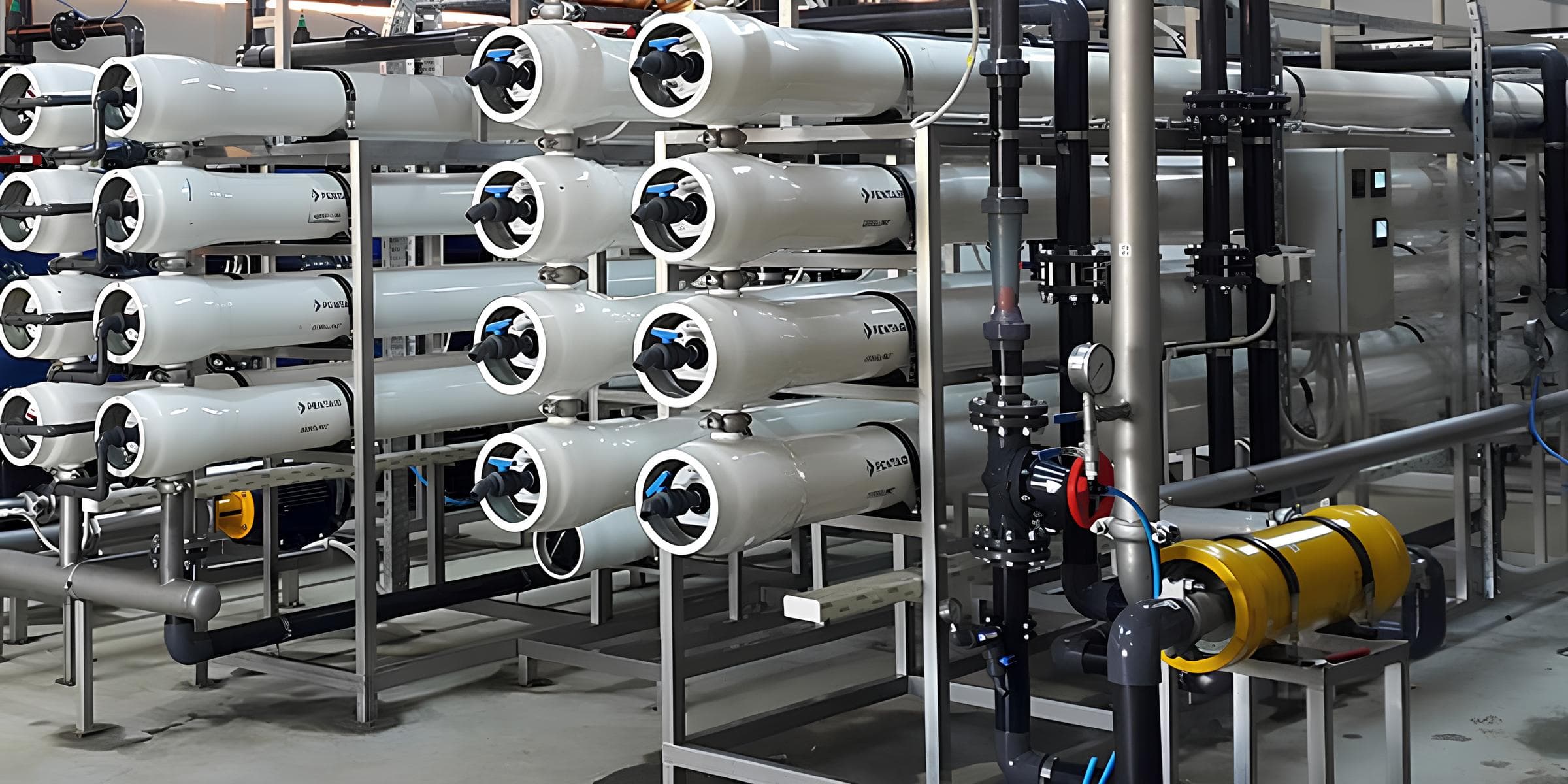
Reverse Osmosis Systems
Reverse osmosis systems in various capacities for domestic, commercial and industrial use, removing up to 99% of harmful substances from your water.
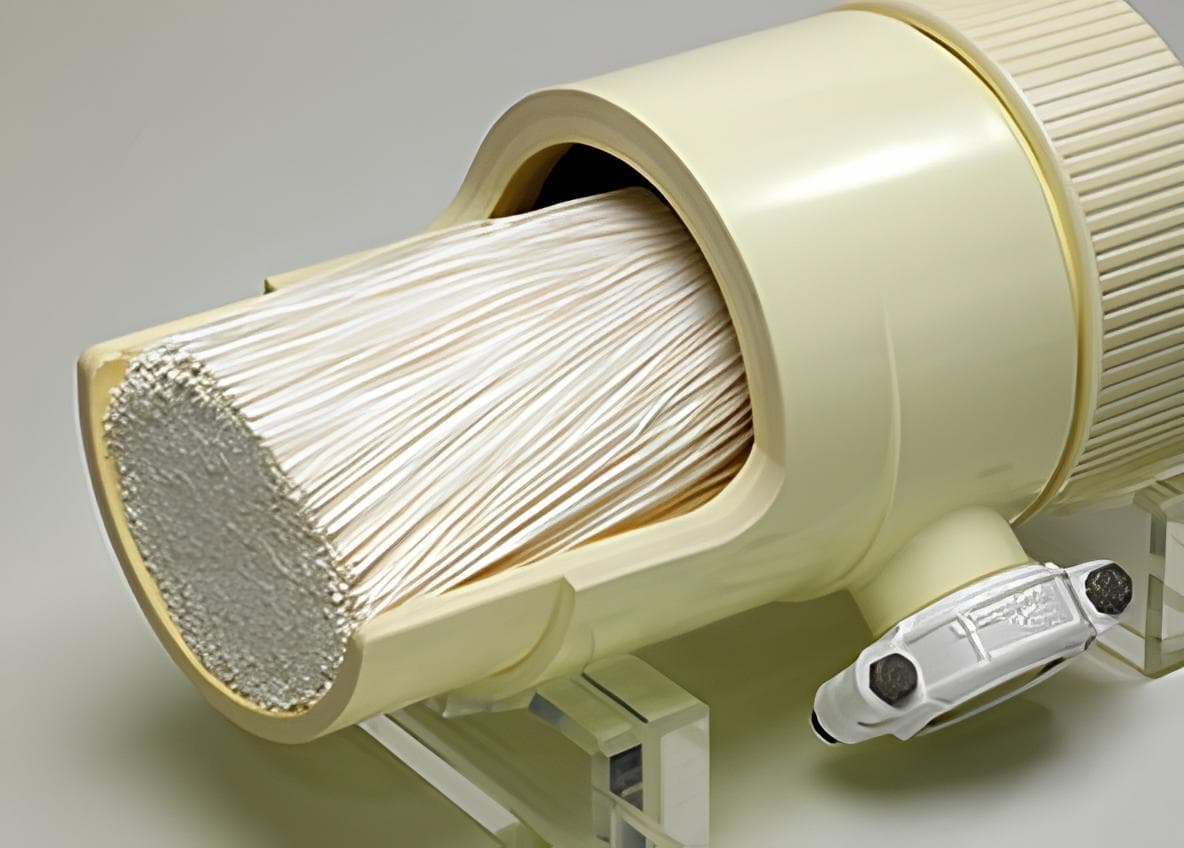
Ultrafiltration Systems
Ultrafiltration systems that remove bacteria, viruses and other microorganisms from water for safe, healthy water.
Microfiltration Systems
Microfiltration systems that remove bacteria and other microorganisms from water for safe use in your industrial applications.
Get a quote for this system
Let us analyse your plant's water and design the right system together.