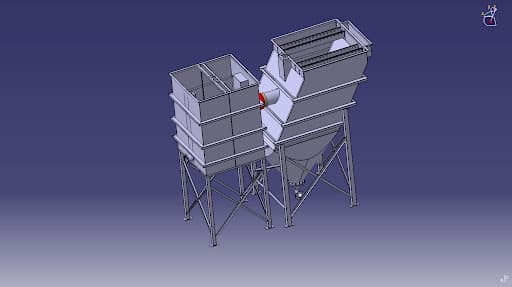
Lamella Treatment Systems: Compact and Effective Water Purification Technology
Water is an indispensable resource for the continuity of life and the sustainability of industrial activity. With growing populations and industrialisation, protecting water resources and making polluted water reusable is of great importance. This is where wastewater treatment technologies come into play. As technology advances, systems that take up less space, work more efficiently and cost less to operate are coming to the fore. One of these innovative approaches is lamella treatment systems. So what exactly are these systems, and what advantages do they offer over conventional methods?
As mentioned in the introduction, lamella treatment technology is a revolutionary development, particularly for treatment units that work on the sedimentation – or settling tank – principle. Its main purpose is to separate suspended solids (SS) and particles from water. In doing so, it achieves high efficiency in a much smaller footprint than conventional settling basins. This makes it an ideal solution especially for plants with limited space.
What Are Lamella Treatment Systems and How Do They Work?
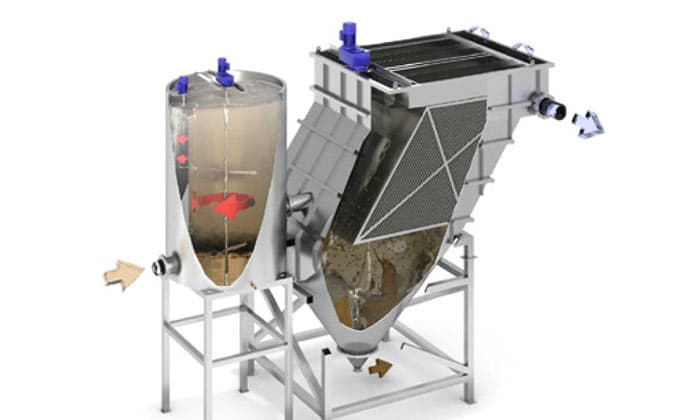
Lamella treatment systems are essentially compact solid–liquid separation units that use inclined plates (lamellae). The operating principle is based on gravity settling. The system works as follows:
- The water to be treated usually enters the lamella unit after a pretreatment stage (for example, after passing through coarse screens or grit chambers).
- As the water flows upwards inside the tank, it passes between the modules of the lamella plate settler, which are arranged parallel to each other at a specific angle (usually 50–60 degrees).
- These inclined plates create a large number of small, effective settling surfaces for the solid particles in the water. Particles that would normally take a long time to settle in a large basin collect much faster on these short-distance, inclined surfaces.
- The solid particles that adhere to the plate surfaces slide downwards under gravity and accumulate in the sludge hopper at the bottom of the tank.
- The clean water, freed of solids, rises from the top of the plates, leaves the unit via collection weirs and moves on to the next stage of the treatment process.
This ingenious design significantly increases settling efficiency and minimises turbulence by providing laminar flow conditions. This means better separation efficiency.
What Are the Advantages over Conventional Settling Methods?
Lamella treatment technology offers many important advantages over conventional settling basins:
- Small Footprint: One of the most obvious advantages is that it takes up much less space. Because the lamella plates increase the settling area vertically, the same or higher efficiency can be achieved in 10% to 25% of the area a conventional settling basin would need. This provides significant cost and space advantages when expanding existing plants or building new ones.
- High Settling Efficiency: Inclined plates allow particles to settle over a shorter distance and more quickly. As a result, effective solids separation even at high hydraulic loads can be achieved.
- Low Investment Cost: Because smaller tanks and less construction work are required, initial investment costs are generally lower.
- Quick Installation: Thanks to their modular design, installation times are very short. Many systems can be prefabricated and shipped to site.
- Flexibility: They can be designed modularly and expanded in capacity to suit different capacities and wastewater characteristics.
- Low Maintenance: Because they usually have few or no moving parts, maintenance requirements and operating costs are low. Self-cleaning designs are also available.
Main Components of Lamella Plate Settlers
A lamella plate settler unit generally consists of the following main components:
- Tank (Body): Usually made of steel (carbon or stainless) or fibreglass-reinforced plastic (FRP). It contains the water inlet, outlet and sludge collection sections.
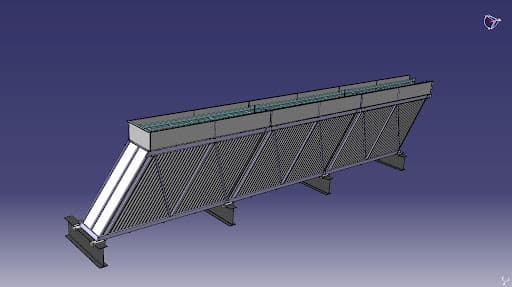
- Lamella Plate Modules: The heart of the system: thin plates made of materials such as PVC, polypropylene (PP) or stainless steel, installed at specific angles. These plates maximise the settling surface area.
- Inlet Section: Ensures that water is distributed evenly into the unit.
- Outlet Weirs: Channels where treated water is collected and discharged from the unit.
- Sludge Hopper: A conical or sloping section at the bottom of the tank where settled solids accumulate. The collected sludge is removed from here periodically or continuously.
- Support Structure: The frame or supports that hold the lamella plates and other components in place.
Common Applications of Lamella Treatment Systems
Thanks to their compact design and high efficiency, lamella treatment systems are preferred in a wide range of industries and applications. The main areas of use are:
- Drinking Water Treatment Plants: Used as a pre-settling unit in the treatment of surface water such as rivers and lakes. Effective in removing turbidity.
- Municipal Wastewater Treatment Plants: Used as primary or secondary settling tanks, especially at plants with limited space in urban areas.
- Industrial Wastewater Treatment:
- Metalworking industry (heavy metal precipitation)
- Pulp and paper industry
- Food and beverage industry
- Textile industry (dyehouse wastewater)
- Mining industry (thickener applications)
- Chemical industry
- Power plants (cooling water treatment, ash settling)
- Stormwater Treatment: Removal of solids and pollutants from stormwater collected in urban areas.
- Process Water Preparation: Pretreatment of water to be used in industrial processes.
- Fish Farms: Removal of solid particles in recirculating water systems.
- Filter Backwash Water Treatment: Recovery of solids from filter backwash water and reuse of the water.
The table below summarises some application areas and the specific benefits of lamella treatment technology:
Application Area | Main Benefit |
|---|---|
Turbidity removal, compact pre-settling | |
Space saving, efficient primary/secondary settling | |
Effective separation of specific pollutants (e.g. metals), compact solution | |
Mining | Process water recovery, reduced waste volume |
Stormwater Treatment | Removal of solids and urban pollutants |
What to Consider When Choosing a Lamella Treatment System
Choosing the right lamella treatment system is critical to the success of the investment and the long-term performance of the plant. The following factors should be considered:
- Wastewater Flow and Characteristics: The flow rate of the water to be treated (m³/h or m³/day), suspended solids concentration, particle size distribution, temperature and chemical composition determine the sizing of the system and the choice of materials.
- Required Effluent Quality: The target treatment efficiency affects design parameters such as plate area, plate angle and hydraulic loading rate.
- Plate Material and Spacing: The corrosiveness and clogging potential of the wastewater call for the right choice of plate material (PVC, PP, stainless steel, etc.) and spacing between plates. For example, wider plate spacing may be preferred for wastewater containing fibrous or sticky particles.
- Sludge Properties and Removal System: The quantity, density and dewatering properties of the sludge produced affect the design of the sludge hopper and the choice of sludge removal equipment.
- Space Constraints: The existing or planned plant area will determine the maximum dimensions of the unit.
- Ease of Operation and Maintenance: Factors such as the level of automation, cleaning requirements and availability of spare parts should be taken into account.
- Cost Analysis: Not only the initial investment cost but also long-term operating (energy, chemicals, maintenance) and maintenance costs should be evaluated.
Maintenance and Operating Recommendations
Lamella treatment systems need regular maintenance and correct operating practices to run efficiently and trouble-free:
- Periodic Checks: The lamella plates should be checked regularly for build-up, clogging or damage.
- Plate Cleaning: If necessary, plates should be cleaned periodically with pressurised water or suitable chemicals. To prevent clogging, plate spacing should be chosen to suit the wastewater characteristics.
- Sludge Removal: Sludge accumulating in the hopper should be discharged at regular intervals or by automatic systems. An excessively high sludge level can adversely affect settling efficiency.
- Inlet and Outlet Checks: Make sure that the water inlet and outlet structures work properly and that the weirs are clean.
- Chemical Dosing (If Required): If chemical pretreatment such as coagulation or flocculation is applied, it is important to optimise and regularly check chemical dosages.
Conclusion: High-Efficiency Treatment in Less Space
In summary, lamella treatment systems represent an important innovation in water and wastewater treatment, providing an effective and economical solid–liquid separation solution, especially where space is limited. Compared with conventional settling tank designs, advantages such as a compact structure, high efficiency and low investment cost make this technology attractive for many different applications.
Today, as water resources become ever more valuable, innovative lamella treatment and other water treatment technologies make an important contribution to sustainable environmental management and industrial efficiency. To learn more about optimised, long-lasting treatment solutions tailored to your plant and to determine the most suitable system for your project, get in touch with our expert engineers. We are at your side with solutions that increase your operational efficiency while fulfilling our environmental responsibilities.