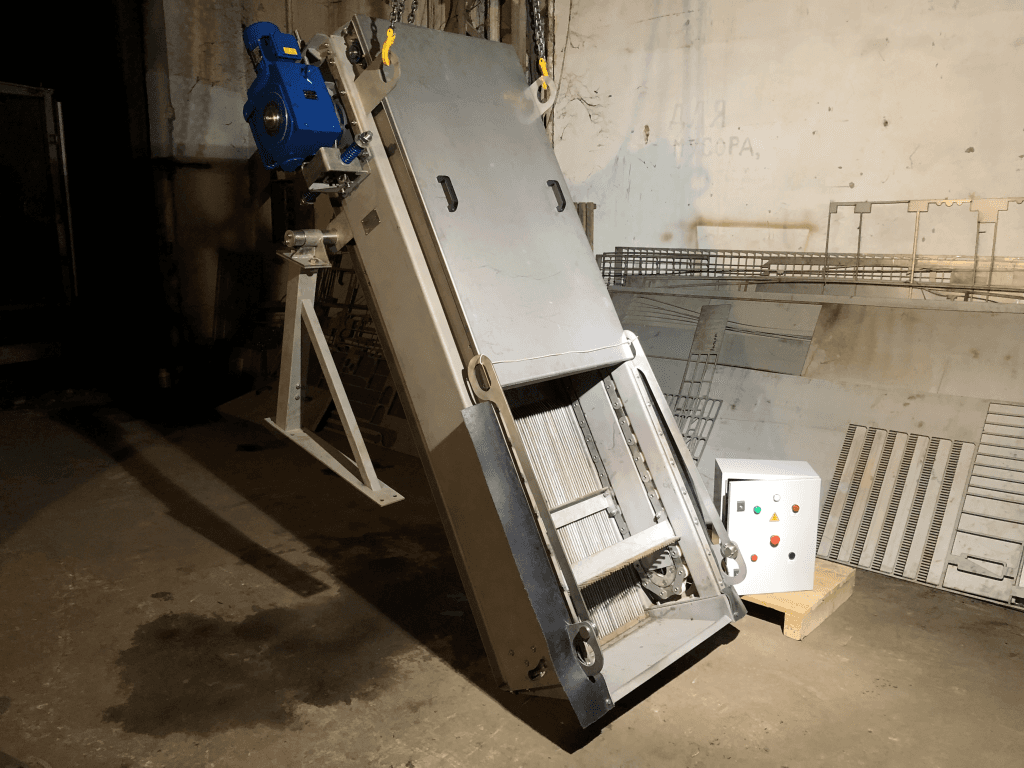
Today's rapidly growing population and industrialisation are putting serious pressure on our water resources. Treating used water – wastewater – before it returns to nature is vital for both environmental health and sustainability. In one of the first and most critical steps of this treatment process, the leading role is played by special systems we call mechanical screens. So what exactly is this equipment and why is it so important? Let's take a closer look.
These solids separation systems are, in the simplest terms, structures that physically separate solids in wastewater (rubbish, bags, leaves, twigs, textiles, etc.) that could damage the downstream units of a treatment plant or reduce their efficiency. This process is essential to protect the plant, prevent pipelines and pumps from clogging and increase overall treatment efficiency. Unlike simple manually cleaned screens, these automatic screens clean themselves, saving labour and enabling uninterrupted operation.
Basic Function and Operating Principle of Mechanical Screens
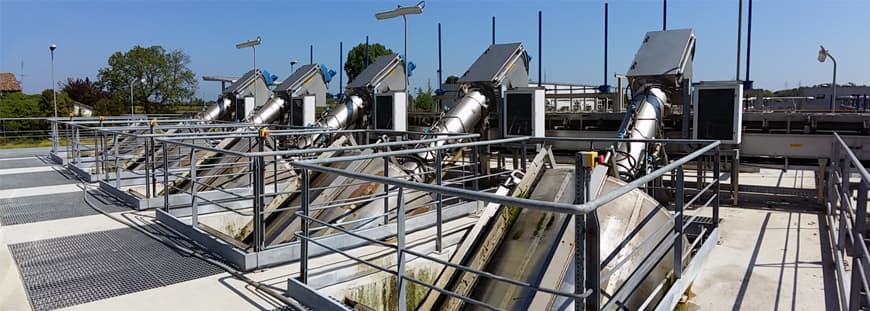
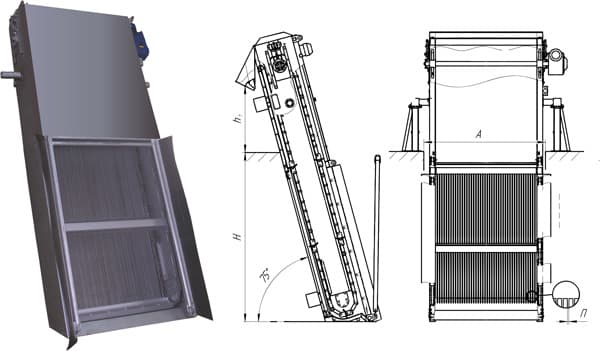
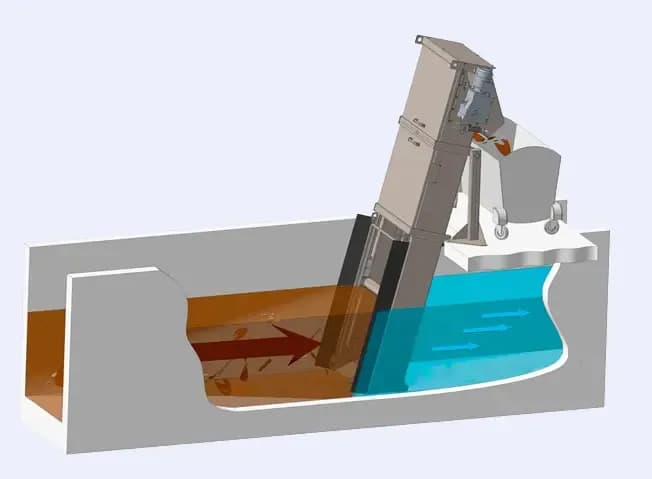
This pretreatment equipment essentially consists of parallel bars or a perforated surface through which the wastewater passes. As the wastewater flows between the bars, solids larger than the bar spacing are retained on the screen surface. This is where the self-cleaning screen mechanism (usually known as a mechanically raked screen) comes into play. Moving rakes, brushes or other cleaning elements operate automatically at set intervals or according to the amount of accumulated solids and scrape off the material collected on the screen surface. The screenings are then transferred to a collection hopper or container and removed from the plant, while the screened water moves on to the next stage of treatment.
This automatic cleaning feature is one of the greatest advantages of these systems. By providing continuous and reliable solids separation, they contribute to trouble-free plant operation.
Place and Importance in the Wastewater Treatment Process
Wastewater treatment plants consist of many complex, interconnected units. This important equipment is usually located at the very beginning of the process, in the stage known as “pretreatment” or “physical treatment”. The main purpose of this stage is to remove coarse and floating matter from the wastewater and so reduce the load on the subsequent biological and chemical treatment units.
The main tasks of these solids separators in the process are:
- Equipment Protection: Protects pumps, valves, pipelines and other sensitive mechanical parts against damage and clogging caused by large solids. This lowers maintenance costs and extends equipment life.
- Higher Process Efficiency: Removing solids allows downstream units (e.g. settling tanks, biological reactors) to work more efficiently. Removing part of the organic load can reduce the oxygen and chemicals required for biological treatment.
- Preventing Blockages: Guarantees uninterrupted plant operation by preventing blockages, especially in narrow pipe sections and at pump inlets.
- Less Sludge: Indirectly reduces the amount of sludge generated at the end of the treatment process and its disposal costs.
In short, without these pretreatment units a modern wastewater treatment plant could not operate efficiently and safely.
Types and Features of Screening Systems
There are various automatic screen models on the market for different wastewater characteristics, flow rates and applications. They can generally be classified by cleaning mechanism, bar spacing and structural design.
Classification by Bar Spacing: Coarse and Fine Screens
- Coarse Screen: Systems with a bar spacing usually between 20 mm and 100 mm, used to retain larger solids (PET bottles, large pieces of cloth, pieces of wood, etc.). Coarse screen units are usually installed upstream of fine screens to reduce their load and help protect them.
- Fine Screen: Bar spacing typically ranges from 3 mm to 20 mm, retaining smaller particles (small pieces of plastic, cigarette butts, food waste, etc.). Fine screens are especially critical upstream of sensitive treatment technologies such as membrane bioreactors (MBR).
- Very Fine Screens (Micro-Screens): With a spacing below 1 mm, these systems are effective at removing much smaller suspended solids and even some fibrous material.
Main Types by Cleaning Mechanism and Design
- Chain-Type Screens (Multi-Rake Screens): One of the most widely used mechanically raked screen types. Rakes mounted on one or more chains move upwards between the screen bars, scraping off accumulated solids and carrying them to a discharge point. They generally suit a range of channel depths and widths.
- Advantages: Effective at high capacities, robust construction, suitable for different types of waste.
- Disadvantages: Need periodic maintenance because of the large number of moving parts.
- Drum Screens (Rotary Screens): Consist of a screen surface around a cylindrical drum. As wastewater flows into or out of the drum, solids are retained on the screen. As the drum rotates, the accumulated solids are removed with brushes or spray nozzles. Particularly effective at retaining fibrous material and small particles.
- Advantages: Compact design, high solids capture efficiency, continuous cleaning.
- Disadvantages: Screen life may be shorter with highly abrasive wastewater.
- Screw (Spiral) Screens: Usually consist of a circular or semicircular screen and a spiral shaft that conveys solids upwards from it. The retained solids can be compacted and dewatered while they are conveyed. Their compact design makes them popular for small and medium-sized plants.
- Advantages: Compact design, conveying and compacting of solids in a single unit, low maintenance.
- Disadvantages: Can be sensitive to very large, hard objects.
- Climber Screens: Systems in which a single rake mechanism cleans the screen by sweeping it from bottom to top. Usually used in deeper channels and heavy-duty applications.
- Advantages: Powerful cleaning, suitable for deep channels.
- Disadvantages: Complex mechanism, higher initial investment cost.
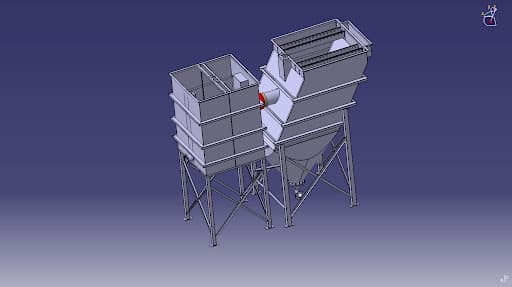
- Static Screens (Sieve Bends): Screens without moving parts, usually with a wedge-wire or perforated-plate surface set at a specific angle. As wastewater flows down the surface, solids stay on it and slide down under gravity to be collected. Commonly used in industrial pretreatment.
- Advantages: No moving parts, low maintenance, low operating cost.
- Disadvantages: Risk of clogging with sticky or fibrous material; cleaning efficiency may be lower than other mechanical systems.
The table below compares some key features of different automatic screen types:
Screen Type | Basic Operating Principle | Main Applications | Key Advantages |
|---|---|---|---|
Chain-Type Screen | Scraping with chain-mounted rakes | Municipal and industrial WWTPs, pumping stations | High capacity, durability |
Drum Screen | Retention on a rotating screen, cleaning with brushes/sprays | Industrial processes, applications needing fine screening | Compact design, high efficiency |
Screw Screen | Retention on a screen, conveying and compacting with a spiral | Small/medium WWTPs, package treatment plants | Compact, compacts solids |
Climber Screen | Bottom-to-top sweeping with a single rake | Deep channels, heavy-duty applications | Powerful cleaning |
Static Screen | Gravity separation on an inclined surface | Industrial pretreatment, solid–liquid separation | Low maintenance, no moving parts |
Tips for Choosing the Right Screening System
Choosing the right screening system is a critical factor for efficient plant operation and a long service life. The following points should be considered:
- Wastewater Flow: The plant's instantaneous and daily maximum, minimum and average flows are the key factors in sizing the system.
- Wastewater Characteristics: The type (fibrous, sticky, abrasive, etc.), size and quantity of solids in the wastewater are important in determining the right screen type and bar spacing. For example, screens with a high fibre-capture capacity may be preferred for textile wastewater.
- Required Screen Spacing: Coarse screen, fine screen or very fine sieve – which one is needed depends on the later stages of treatment and the discharge standards.
- Channel Dimensions: The width, depth and shape of the existing or planned channel affect equipment dimensions and mounting method.
- Material Selection: The material of the screen (usually stainless steel AISI 304, AISI 316 or specially coated carbon steel) should be chosen according to the corrosiveness of the wastewater and the expected service life of the equipment. Stainless steel is often preferred for its corrosion resistance.
- Level of Automation: Automation requirements should be defined, such as whether cleaning is timer-controlled, level-sensor-controlled or manual.
- Ease and Cost of Maintenance: Consider how easily the equipment can be maintained, the availability of spare parts and overall operating costs.
- Energy Consumption: Especially at large plants, motor power and energy efficiency can be an important factor.
How Should Automatic Screens Be Maintained?
Like every automatic system, these solids separators need regular maintenance and inspection. This extends equipment life, reduces the risk of failure and ensures consistently high performance. The main maintenance activities are:
- Regular Observation and Cleaning: Check daily for abnormal build-up on the screen surface and whether the cleaning mechanism works properly. Inspect wearing parts such as scraper rubbers, brushes and nozzles.
- Lubricating Moving Parts: Moving parts such as chains, gears and bearings must be lubricated regularly in line with the manufacturer's recommendations.
- Wear Checks: Rakes, screen bars and other parts exposed to wear should be checked regularly and replaced if necessary.
- Motor and Gearbox Checks: The condition, oil levels and connections of the motor and gearbox should be checked periodically.
- Safety Equipment Checks: The functionality of safety equipment such as emergency stop buttons and protective covers should be tested regularly.
- Keeping Spare Parts: Keeping stock of critical wearing parts keeps downtime to a minimum in the event of a failure.
Remember, a well-planned preventive maintenance programme will ensure that your installed screening system serves efficiently and trouble-free for many years.
Conclusion: The First Step in Effective Wastewater Management
This equipment, although seemingly simple, is one of the cornerstones of the wastewater treatment process. It plays a vital role in protecting our water resources and preventing environmental pollution. A correctly selected, properly installed and regularly maintained automatic screening system significantly increases the overall efficiency and reliability of a treatment plant. Coarse screen and fine screen options let them meet different needs – these self-cleaning systems are an indispensable part of modern treatment technology.
For more information on water treatment and wastewater management and for efficient solutions tailored to your plants, contact our experienced engineers for support on the most suitable mechanical screen and other equipment for your project. Investing in the right technologies for a sustainable future is a responsibility we all share.