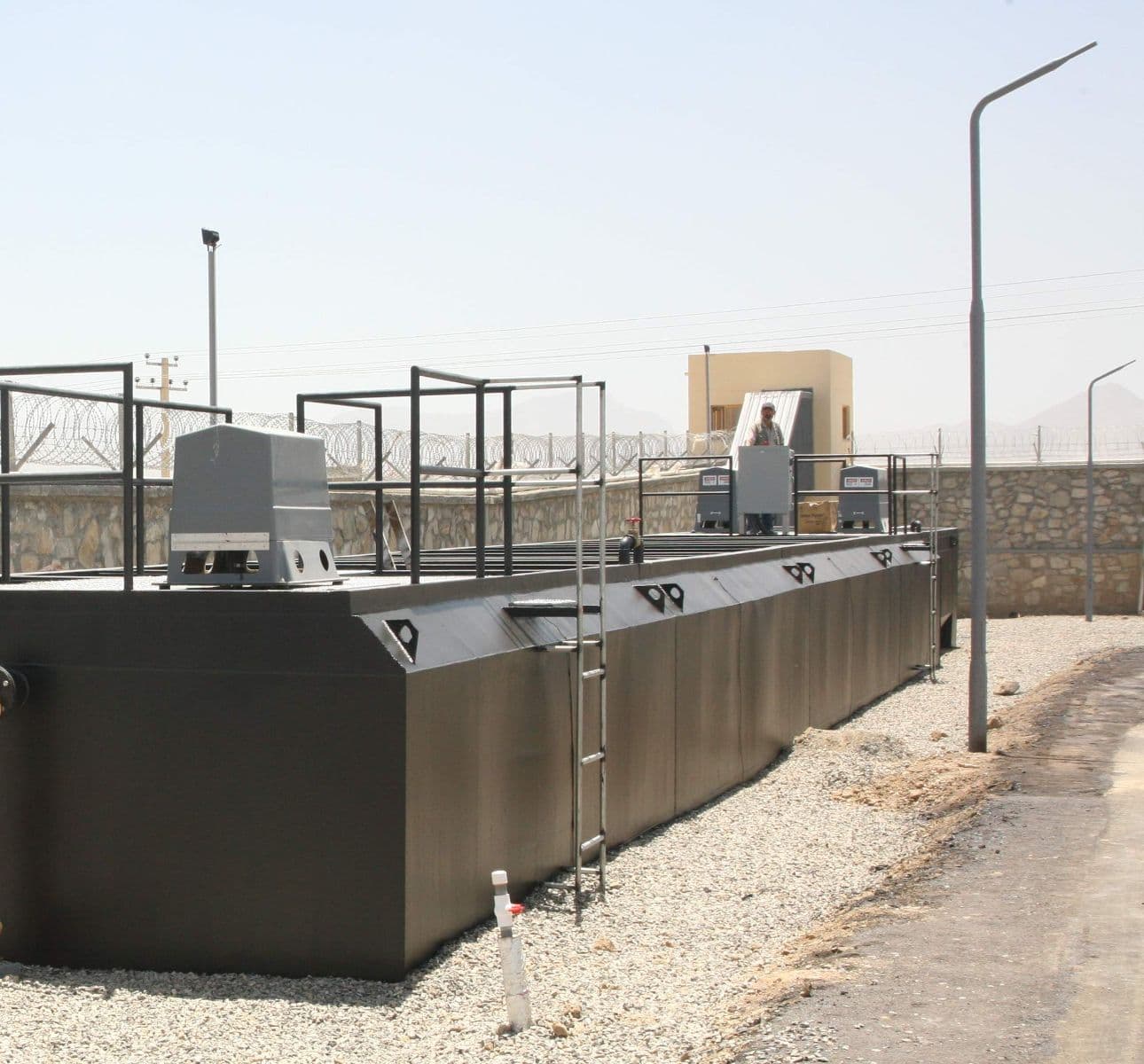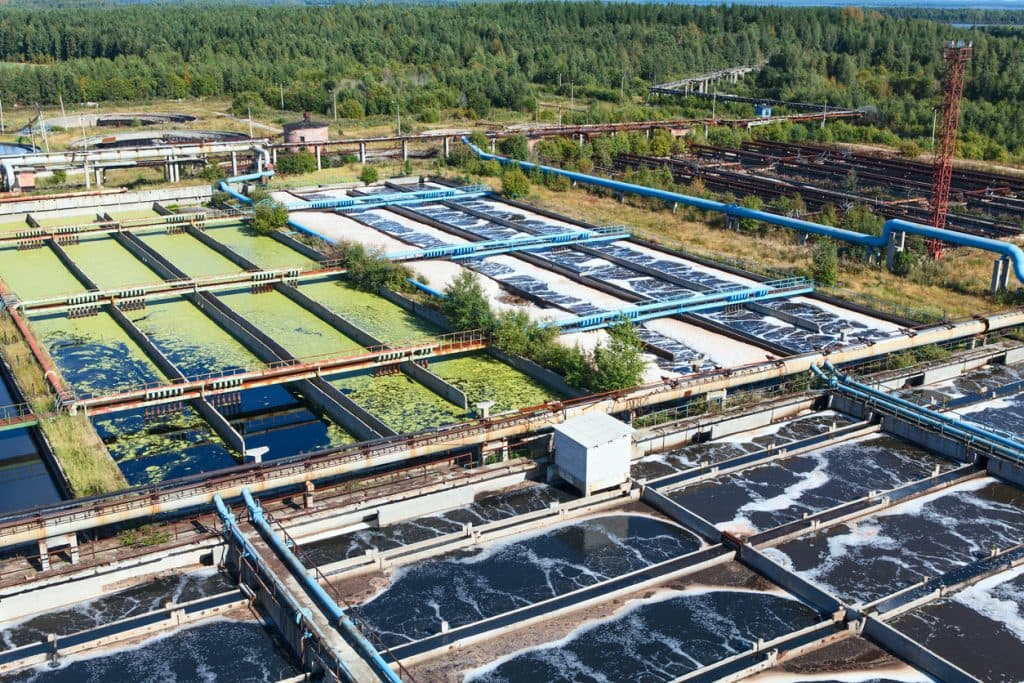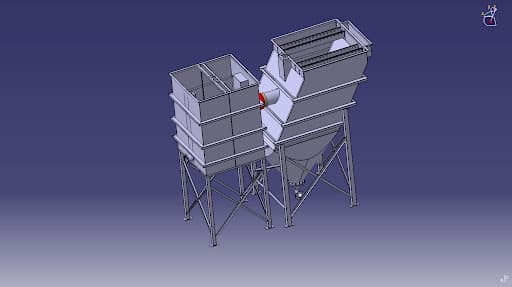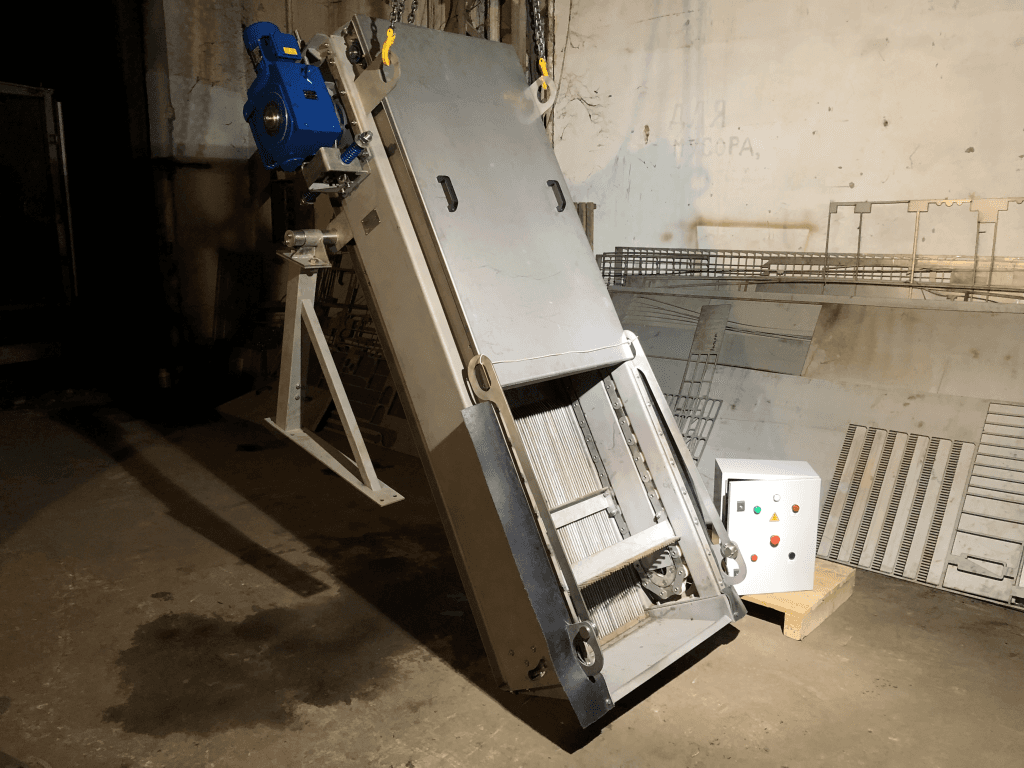
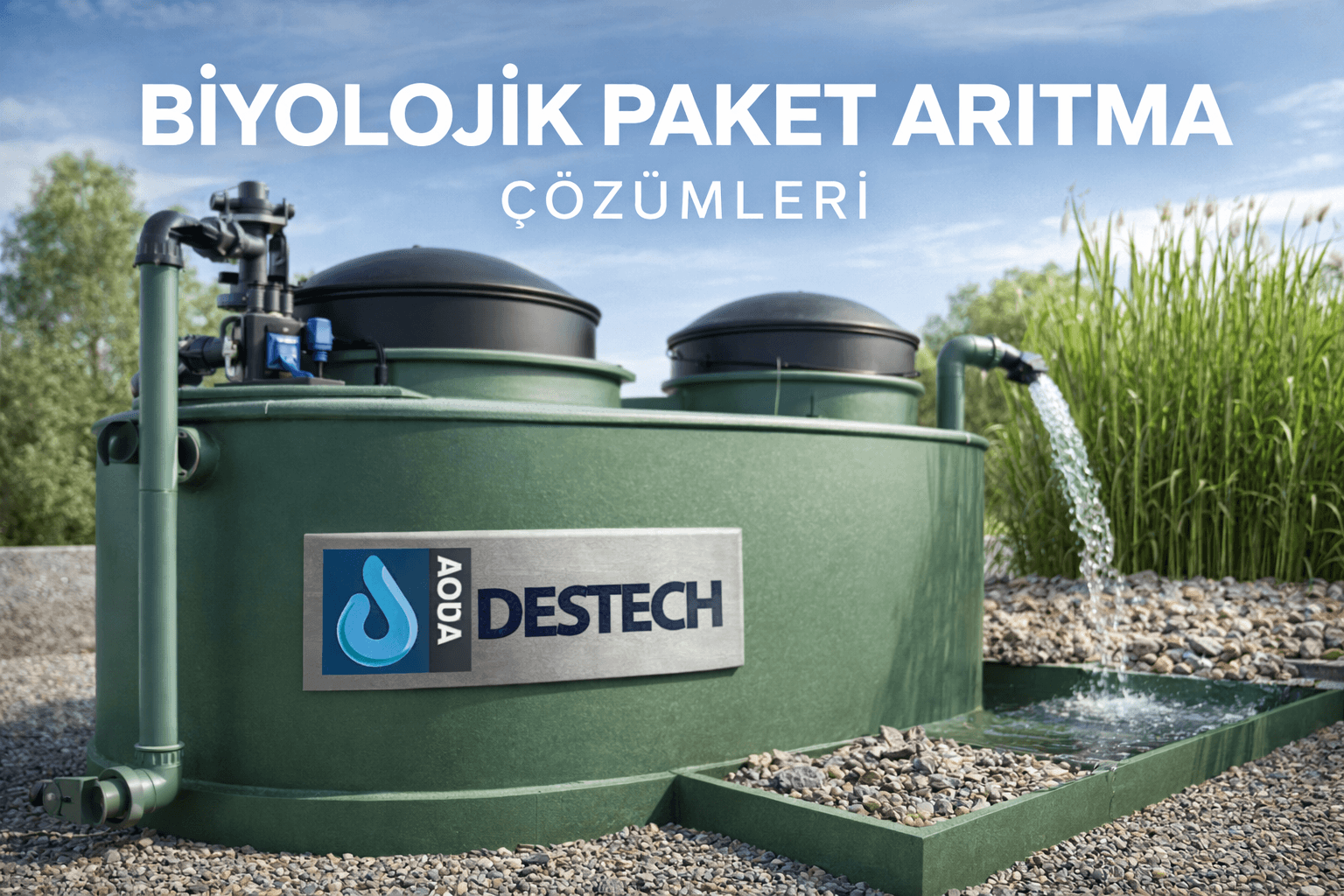
Biological package treatment. In industrial facilities, wastewater management usually has to be solved within the triangle of “limited space + variable load + regulatory pressure”. Biological package treatment stands out as a practical answer to this triangle: a modular approach that can be commissioned quickly on site and, when designed correctly, delivers stable effluent quality. However, not all wastewater behaves the same way biologically. That is why selection, design and operating decisions need to be clarified under a few critical headings.
Biological package treatment flow diagram and main units
1) Is the wastewater really suitable for biological treatment?
The first check concerns “biodegradability” and “inhibition”. In processes with a low BOD/COD ratio, toxic compounds or sudden pH/temperature shocks, a pre-treatment set-up is essential rather than loading the biology directly. Inhibitors such as solvents, heavy metals, high salinity or disinfectant residues in particular can cause performance loss in the reactor and sludge settling problems.
2) Don't expect stable results without equalising flow and load fluctuations
The most common mistake on site is keeping the equalisation volume small to “save space”. Equalisation smooths fluctuations in flow, COD and suspended solids, provides a more homogeneous feed to the biological reactor and prevents equipment from being overstressed at peak loads. In Aquadestech's package system approach, pre-treatment and equalisation stages are treated as the backbone of the process.
3) Process selection: when to use ASP, SBR, MBBR/IFAS or MBR?
There is no single “best” process; the target discharge standard and operating realities are decisive:
- Activated sludge (ASP): A reliable classic for continuous flow if you have the space and a strong operations team. Nitrogen removal (nitrification/denitrification) is easy to integrate.
- SBR: Offers flexibility with variable flows and loads; operates with fill–react–settle–decant steps in the same tank.
- MBBR/IFAS: A compact solution with biofilm carriers; more tolerant of shock loads and can be practical for capacity upgrades.
- MBR: Preferred where space is limited and high effluent quality is targeted; however, energy and membrane operating costs must be taken into account.
Aquadestech's biological treatment units page brings together these process alternatives and industrial application notes.
4) Is there a nitrogen and phosphorus target? If so, the reactor is no longer a “single tank”
COD/BOD removal alone is not enough in most industries. For discharges with total nitrogen and/or phosphorus limits, an anaerobic/anoxic/aerobic zone arrangement, recirculation and (if necessary) chemical support are considered. At this stage, process control (DO, ORP, internal recirculation) directly affects performance.
5) Automation and measuring points: saying “we have sensors” is not enough
The contribution of automation on site comes from correct measurement and correct maintenance. At least monitoring pH, dissolved oxygen (DO), flow and (if possible) temperature reduces the plant's blind spots. A sensor without a calibration plan becomes just a “display” within a few months.
6) Sludge management is the silent item in total cost
Excess sludge is the unavoidable output of biological systems. If dewatering equipment, sludge storage and a disposal/recovery plan are not planned from the start, operating costs rise faster than expected. A common mistake is to postpone the sludge line in the project with “we'll deal with it later”.
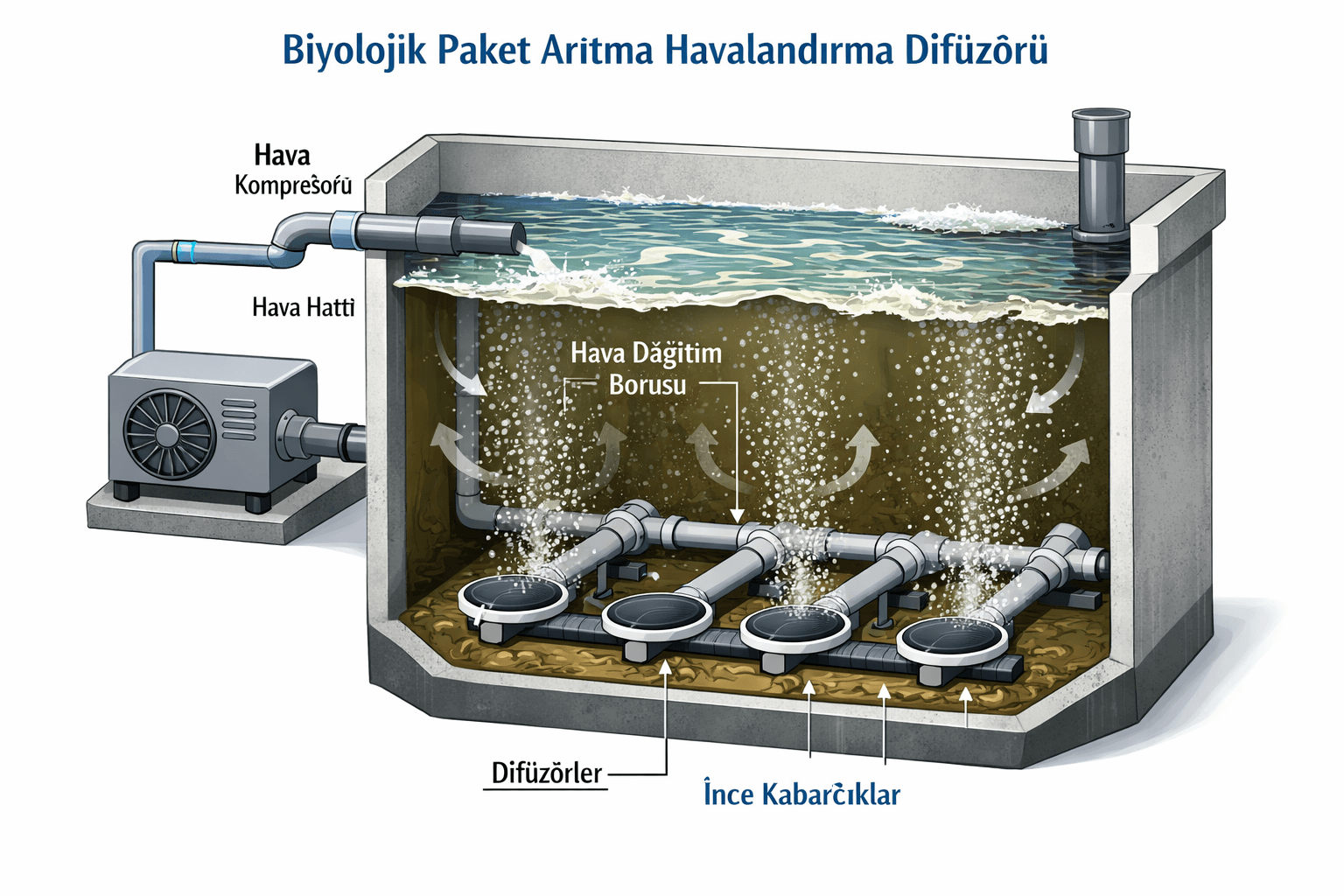
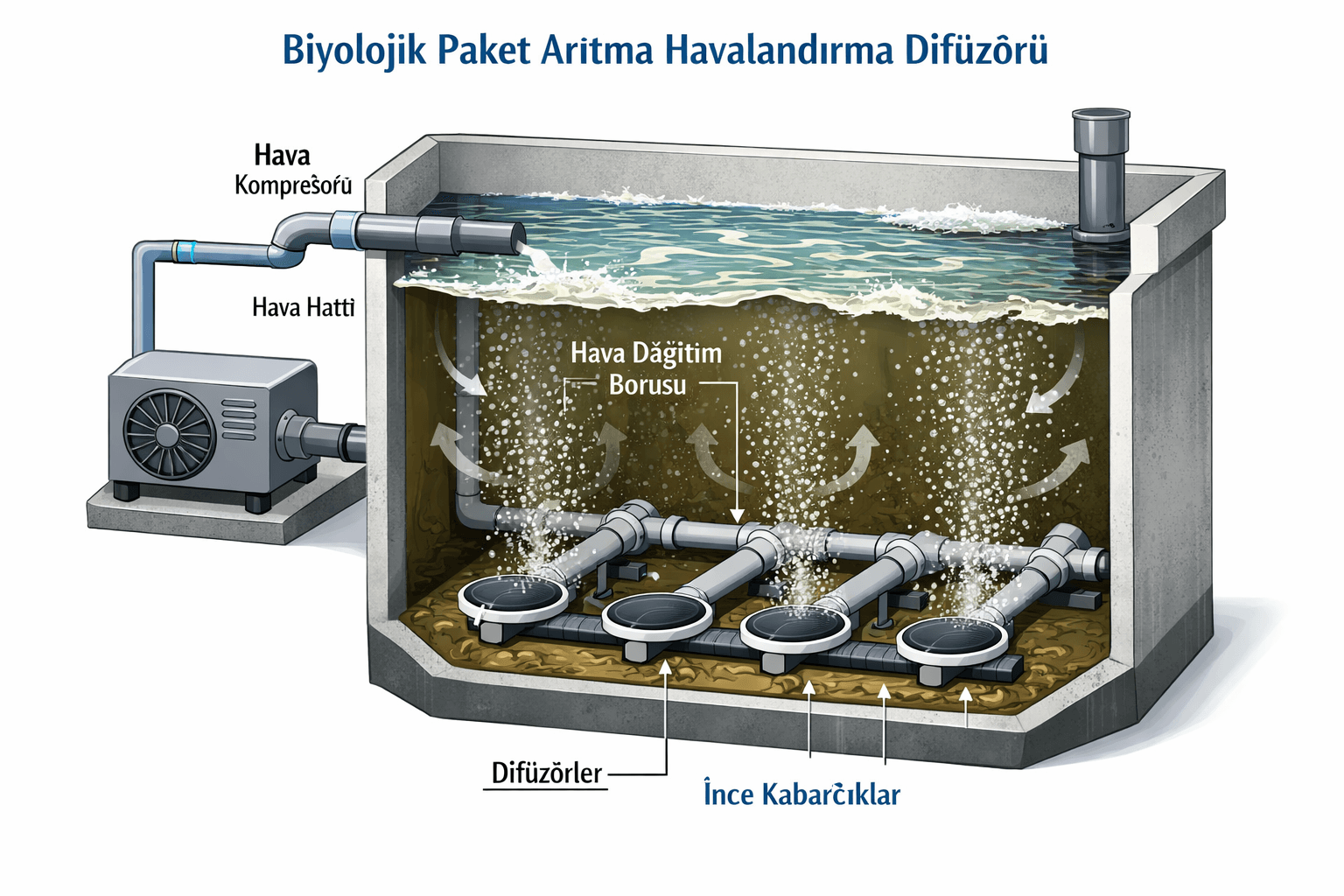
In biological package treatment, most energy consumption goes into aeration; blower selection and diffuser maintenance play a critical role.
7) Read energy consumption through scenarios, not values “on paper”
Energy costs mostly come from blowers and mixing. With loads that vary during the day, a speed-controlled (VFD) set-up instead of fixed-speed blowers can bring significant advantages with the right control strategy. This requires clarifying minimum–maximum flow/load scenarios in the design.
8) A 9-question quick checklist before purchasing
- Influent: flow (min/average/max), pH, temperature, COD/BOD, TSS, TN/TP?
- Are there shock loads and chemical cleaning (CIP) discharges?
- Are the target discharge point and limits (SKKY, sewer connection conditions, etc.) clear?
- Have the equalisation volume and pre-treatment needs (screen, grease-grit trap, DAF/chemical) been determined?
- Is the selected process suitable for variable flow/load?
- Is the sludge line (dewatering + storage + disposal) within scope?
- Automation: are critical sensors, redundancy, remote monitoring and alarm logic in place?
- Commissioning plan: are the seeding/acclimatisation period and performance acceptance criteria written down?
- Are spare parts and a service SLA (blowers, pumps, sensors) defined?
9) How does the process work with Aquadestech?
Aquadestech offers an engineering approach that can manage the process analysis → design → manufacturing → installation → commissioning chain in industrial facilities from a single source. For example, the operating logic on our activated sludge systems page summarises the practical on-site steps of the classic biological set-up.
Regulations and technical references
At project stage, the “design value” and the “permit/inspection value” are not the same thing. In Türkiye, the Water Pollution Control Regulation is the main reference for the discharge and monitoring framework. In addition, public guidelines and international technical publications on operation and design help set realistic performance targets.
- Wastewater Treatment Plants Standards Guide (Ministry of Agriculture and Forestry)
- EU Industrial Emissions Directive 2010/75/EU (BAT approach)
- Example US EPA technical document (nutrient removal)
- IWA: Biological Wastewater Treatment (Principles, Modelling and Design)
Frequently asked questions
What does installation time depend on?
It varies with manufacturing time, site infrastructure and commissioning conditions; the main factor is the civil and piping preparation for pre-treatment and equalisation.
Does performance drop in cold weather?
Yes. Biological reactions slow down at low temperatures; the design should include a safety margin and, if possible, tank/pipe details that reduce heat loss.
Will there be odour?
With correct aeration, regular sludge withdrawal and control of retention times, the risk of odour is significantly reduced.
Is it possible to reuse the treated water?
If process water quality is the target, the biological stage must be complemented by advanced treatment such as filtration/UF/RO.
How should analysis frequency be planned?
It is planned according to the discharge permit and process risk; more frequently during commissioning, moving to routine intervals once operation is stable.